
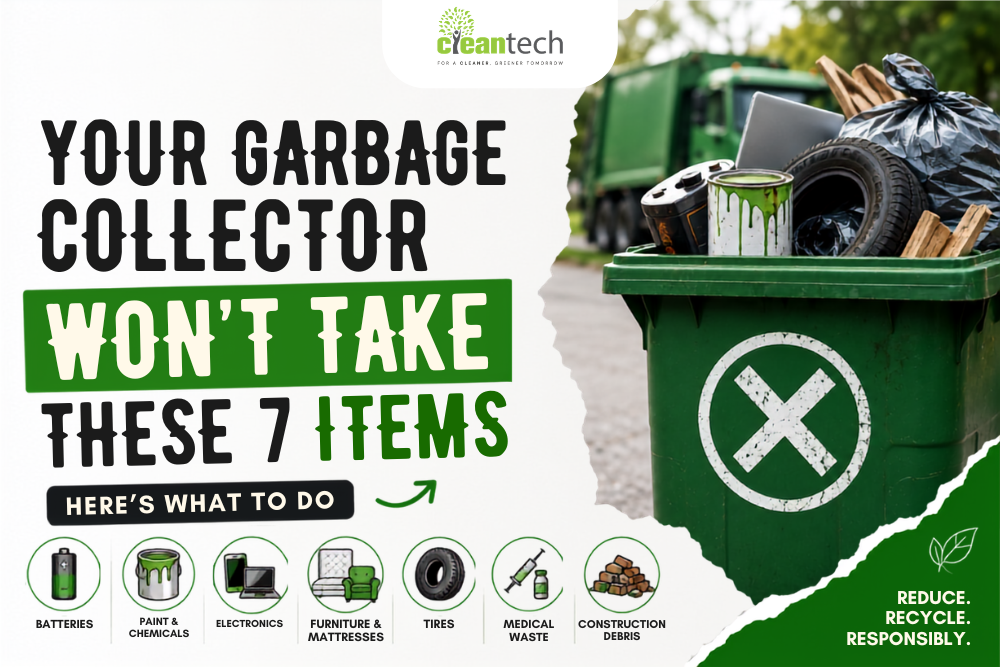
Most of us just kinda assume trash is trash. Like, if it’s broken, old, or we don’t need it anymore, it goes in the bin and boom problem solved, right? But yeah… not really how it works all the time.
There are actually quite a few items garbage collectors won’t take, and people usually find that out the awkward way you leave it outside, come back later, and it’s still sitting there like nothing happened. It’s a bit annoying, but there’s logic behind it. Some things are dangerous, some are too heavy, and some just mess with the whole waste system.
And the funny thing is, most of these items are super normal household stuff. Batteries lying around, old paint cans from “one day I’ll use it” projects, broken furniture shoved in a corner for months. Nothing weird. Still not allowed in regular pickup though.
Once you know the rules, it’s not that complicated. Just a few simple habits, really.
1. Batteries Can Start Dangerous Fires
Batteries look harmless, right? Small, quiet, just sitting there. But inside waste systems, they’re kind of a troublemaker.
Especially those lithium-ion ones phones, laptops, power banks, earbuds, all that stuff. When garbage trucks crush waste, these batteries can get damaged and suddenly spark or overheat. And yeah, sometimes they actually start fires. Not exaggerating.
Even normal AA batteries aren’t totally safe either. If they leak, they release chemicals that mess with soil and water over time. Not something you want sitting in a landfill.
So instead of tossing them in the bin, better just drop them at a recycling point or electronics shop. Many places have those little collection boxes now, so it’s not even a big hassle. It just takes a bit of habit change.
2. Paint and Chemical Containers Require Special Disposal
Old paint is one of those things that just hangs around forever. Like you think, “I might use this later,” and it sits in the garage for years collecting dust.
But when it’s finally time to get rid of it, don’t just throw it in the trash. Paints, pesticides, cleaners, thinners all have chemicals that can leak and cause problems in landfills. Some are even flammable, which is obviously not great for garbage trucks.
That’s why items garbage collectors won’t take often include stuff like this. It’s more about safety than anything else.
Some places allow dried latex paint, but liquid stuff usually needs special disposal. Hazard waste drop-offs exist for exactly this reason. A bit of effort, but safer overall.
And if it’s still usable paint? Honestly, just give it away. Someone somewhere will use it.
3. Old Electronics Cannot Be Mixed With Household Garbage
We all have that “tech graveyard” somewhere at home: old phones, dead remotes, broken chargers, maybe a laptop that gave up years ago.
The problem is, electronics aren’t just plastic junk. They’ve got metals, circuits, batteries, and chemicals inside. If they end up in landfills, they can slowly leak harmful stuff, plus you lose materials that could’ve been recycled.
That’s why electronics are usually on the list of items garbage collectors won’t take. They need separate handling.
Good news though e-waste recycling is way easier now. Shops, repair centers, and recycling points often take old devices. Some even give discounts if you trade them in. So yeah, better than letting them rot in a drawer forever.
4. Mattresses and Large Furniture Need Bulk Collection
If you’ve ever tried dragging a mattress out of a house, you already know why garbage trucks don’t like them. They’re big, awkward, and honestly a bit of a nightmare to handle.
Same goes for sofas, wardrobes, dining tables, carpets, all that bulky stuff. It just doesn’t fit properly in normal waste pickup. So people leave it outside… and then wonder why it’s still there later.
These are classic items garbage collectors won’t take unless you arrange bulk pickup.
Sometimes, though, you don’t even need to throw them away. If the furniture is still decent, donation centers or second-hand shops might take it. Otherwise, recycling services break them down into wood, metal, and foam. Not bad, actually.
5. Tires Are Not Accepted in Regular Garbage Pickup
Old tires are weirdly problematic. They don’t rot, they don’t break down easily, they just… exist forever.
And if dumped wrong, they collect water, attract mosquitoes, and become a fire hazard too. Tire fires are especially nasty thick smoke, hard to control, all that bad stuff.
So yeah, tires are definitely on the list of items garbage collectors won’t take. Regular trucks just aren’t built for them.
Usually tire shops or garages handle disposal when you replace them. And the cool part? Old tires actually get reused a lot on roads, playground flooring, sports tracks. So they do get a second life.
6. Medical Waste Can Put People at Risk
This one’s serious. Medical waste isn’t something you can simply throw into your regular bin.
Needles, syringes, expired medicines, bandages, and other clinical waste can be dangerous if they’re not disposed of properly. Imagine a waste collection worker getting injured by a hidden needle in a trash bag. That’s exactly the kind of risk proper disposal is meant to prevent.
That’s why clinical waste should always be separated and placed in the yellow waste bag or yellow clinical waste bin, which is the standard colour code used for infectious and clinical waste. It should never be mixed with general household garbage.
Pharmacies, hospitals, and clinics have approved disposal systems, and many also provide dedicated sharps containers for needles and other sharp objects. Taking a few extra moments to dispose of medical waste correctly helps protect waste collectors, healthcare workers, your family, and the wider community
7. Construction Debris Is Too Heavy for Standard Collection
After a renovation, the mess can be wild. Broken tiles, bricks, cement chunks, wood scraps it piles up fast.
But here’s the thing: garbage trucks aren’t built for that kind of weight or mess. It’s too heavy, sometimes sharp, and not safe for regular handling.
So construction waste becomes one of those items garbage collectors won’t take unless you arrange special pickup.
Skip bins or construction waste services are usually used instead. And sometimes materials like metal or wood can even be recycled, which is a bonus.
Conclusion
At first glance, it feels like trash is just trash. But once you look a bit closer, it’s actually a whole system with rules and safety concerns behind it.
A lot of items garbage collectors won’t take are things we use every day: batteries, electronics, furniture, paint, even old medicine. Nothing exotic, just normal household stuff that needs a bit more care.
Once you know what goes where, it gets easier. And honestly, it’s not about making life complicated, it’s just about keeping people safe and not messing up the environment. A few small habits, that’s really it.