
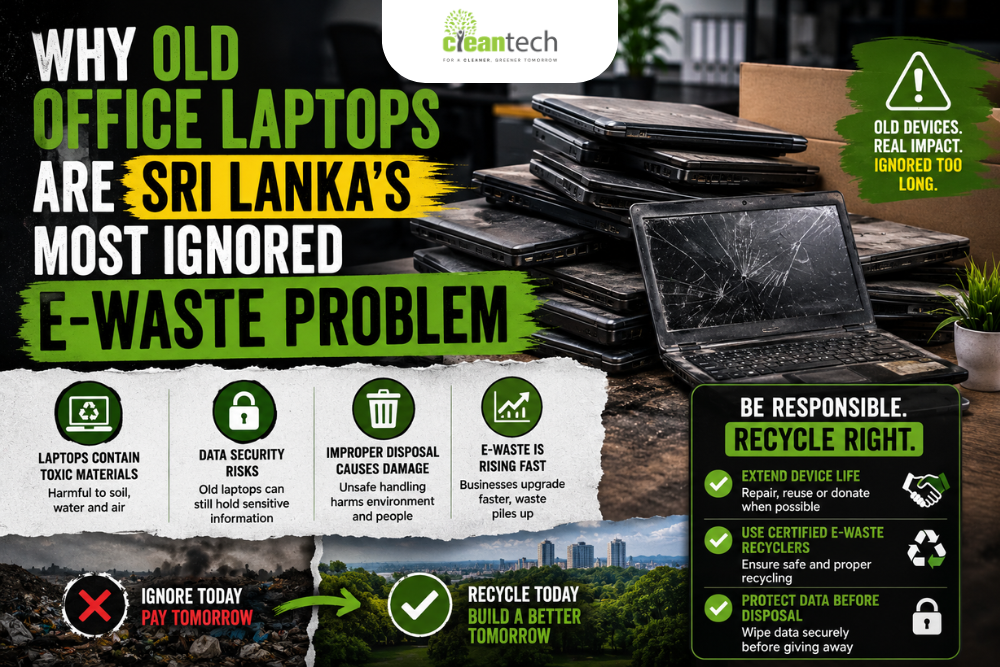
Most businesses in Sri Lanka replace office laptops every few years. Sometimes even sooner. A device that worked perfectly fine three years ago suddenly feels “too slow” for modern work, so companies move on to newer models and keep the old ones somewhere in storage. And honestly, that’s where the problem usually starts.
The issue of office laptop e-waste Sri Lanka is growing quietly in the background, but not many people really talk about it. Old laptops pile up in cupboards, server rooms, office corners, or random storage boxes. Some eventually get sold off cheaply, while others end up in the wrong recycling channels. A few are simply forgotten.
What makes this worse is that office laptops are not treated the same way as plastic waste or household garbage. They contain batteries, metals, wires, and sometimes years of company data. So when they’re dumped carelessly, the impact is much bigger than people assume at first.
In this article, we’ll look at why office laptops have become one of the country’s most overlooked e-waste issues, how they affect the environment, and what businesses should actually do with these old devices before the situation becomes harder to manage.
What Counts as E-Waste?
E-waste means electronic waste. Basically, any electronic device that is broken, outdated, or no longer useful can fall into this category. Most people immediately think about old phones, but office equipment creates a massive amount of e-waste too, maybe more than expected.
Things like laptops, desktop computers, chargers, printers, keyboards, monitors, hard drives, and even damaged cables are all considered electronic waste. In a normal office setup, these items get replaced pretty regularly. Over time, that creates a surprising amount of unused electronics sitting around.
The problem is, electronics are not regular trash. You can’t really treat an old laptop the same way you’d throw away paper or food waste. Devices contain chemicals and materials that need proper handling. If businesses ignore that part, small disposal mistakes slowly turn into a much larger environmental issue.
Why Old Office Laptops Become a Big Problem
Old office laptops become a problem mainly because companies upgrade faster now than they used to. Technology changes quickly, software needs more power, and businesses want employees working on faster systems. So devices are replaced more often, even when they still partly function.
But after replacement, many organizations don’t have a clear plan for what happens next. Some laptops get stored away “temporarily” and then stay untouched for years. Others are handed over to informal scrap buyers without checking how they’ll actually be dismantled or recycled.
Another issue people overlook is data security. Even old, damaged laptops may still contain sensitive files, passwords, or company records. So improper disposal is not only an environmental concern. It can also become a business risk.
Companies Upgrade Faster Than Before
Modern offices rely heavily on software, cloud systems, video meetings, and remote collaboration tools. Older laptops often struggle with these tasks, so businesses upgrade devices more frequently than before.
A laptop that feels outdated in a corporate office may still work, but companies usually prioritize speed and efficiency. As a result, large numbers of devices become unused within just a few years. This fast replacement cycle is one reason why electronic waste keeps increasing across Sri Lanka.
Many Devices Sit Unused for Years
A surprising number of office laptops are not recycled immediately. They just sit there. In storage cabinets, IT rooms, shelves, sometimes even packed inside old cardboard boxes nobody opens anymore.
Businesses delay disposal for different reasons. Some worry about losing important files, while others simply don’t know the correct recycling process. And honestly, a few companies keep devices because “they might be useful later,” even if they never actually use them again.
Eventually these forgotten electronics pile up and create unnecessary waste management problems.
Informal Disposal Is Common
In many cases, old laptops are sold to informal scrap collectors because it feels easier and cheaper. But unsafe recycling methods can release toxic materials into the environment. Workers handling electronics without proper protection may also face health risks over time.
There’s another problem too. If hard drives are not wiped correctly, confidential company data could still be recovered from discarded devices. That part gets ignored more often than it should.
The Environmental Impact of Laptop E-Waste in Sri Lanka
Laptops may look harmless from the outside, but internally they contain materials that can seriously damage the environment when disposed of carelessly. Batteries, circuit boards, plastics, and heavy metals all require proper recycling methods.
When electronic waste is dumped in landfills or dismantled improperly, harmful substances can leak into soil and nearby water systems. Burning electronic parts is even worse because toxic fumes can spread into the air. Over time, these pollutants affect surrounding communities, especially in crowded urban areas.
Sri Lanka already faces challenges with waste management in general, so increasing amounts of electronic waste only add more pressure. The difficult part is that the damage doesn’t always appear immediately. Environmental effects from e-waste often build slowly over years.
That’s why proper recycling matters more than many businesses realize.
Data Security Risks Businesses Often Ignore
One thing companies often forget is that old laptops still store data, even after they stop being used. Files may seem deleted, but in many cases they can still be recovered if the device isn’t wiped properly.
Old office laptops may contain employee information, customer details, passwords, financial reports, emails, contracts, and internal documents. Throwing away devices without secure data destruction creates unnecessary security risks.
Some businesses only remove visible files and assume the device is safe to dispose of. Unfortunately, that’s usually not enough. Proper data wiping or certified destruction methods are important before recycling any office electronics.
A single forgotten hard drive can create bigger problems than expected.
Why Sri Lanka Struggles With Office E-Waste Management
Sri Lanka’s office e-waste problem continues growing partly because awareness is still limited. Many companies understand general recycling, but electronic waste is often treated differently or ignored altogether.
Some workplaces do not have proper disposal policies. Others avoid recycling because they think the process will be expensive or complicated. So outdated electronics remain stored away for long periods instead of being handled responsibly.
Informal recycling networks also play a major role. They are easier to access, but unsafe dismantling practices can damage the environment and create health risks for workers. Without stronger awareness and better disposal habits, office-related e-waste will probably continue increasing over the next several years.
Limited Awareness
A lot of businesses still don’t fully understand how serious electronic waste can become. Compared to daily operational work, e-waste management often feels less urgent, so it gets pushed aside.
Lack of Proper Disposal Habits
Many offices have no structured process for handling retired electronics. Devices are stored, forgotten, or disposed of without proper planning. Over time, this creates unnecessary clutter and waste.
Informal Recycling Networks
Informal recyclers are often chosen because they are cheaper and easier to reach. But unsafe dismantling methods may expose workers to hazardous materials and increase environmental pollution.
What Businesses Should Do With Old Office Laptops
Businesses don’t necessarily need complicated systems to improve e-waste management. Even a few simple steps can make a noticeable difference.
First, companies should regularly check what unused electronics they actually have. Many organizations are surprised by how many old devices are sitting around unused. Conducting basic e-waste audits helps identify what can still be reused and what should be recycled.
Sensitive data should always be erased securely before disposal. That step is extremely important. After that, reusable laptops can sometimes be refurbished or donated, while damaged devices should go through proper recycling channels.
Working with authorized e-waste recyclers also helps businesses avoid unsafe disposal practices. It’s not only better for the environment, it also reduces long-term security risks.
Can Old Office Laptops Be Reused or Refurbished?
Not every outdated laptop needs immediate recycling. Some devices can still be repaired, upgraded, or reused for lighter tasks. Schools, charities, startups, and community organizations may benefit from refurbished systems that larger companies no longer need.
Reuse is often better than immediate disposal because it extends the lifespan of electronics and reduces unnecessary waste. But of course, not every device is suitable for refurbishment. Severely damaged or outdated laptops may no longer be safe or practical to use.
In those cases, proper recycling becomes the better option. The key is knowing when a laptop can realistically be reused and when it has reached the end of its lifecycle.
The Future of E-Waste Recycling in Sri Lanka
Awareness around electronic waste is slowly improving in Sri Lanka. More businesses are starting to understand that old electronics are not just clutter sitting in storage rooms. They are part of a much larger environmental and security issue.
As sustainability becomes more important, companies will likely pay closer attention to responsible recycling and safer disposal methods. Better recycling systems, stronger awareness campaigns, and improved workplace policies could help reduce electronic waste problems over time.
Still, progress may take time. Technology usage keeps increasing every year, which means the amount of office e-waste will continue growing too. Businesses that act early and create proper disposal habits now will probably be in a much better position later.
Conclusion
The problem of office laptop e-waste in Sri Lanka is often ignored because old laptops don’t seem dangerous at first glance. They sit quietly in storage rooms or office corners, so businesses rarely think much about them. But over time, these unused devices create environmental risks, waste management problems, and even data security concerns.
As companies continue upgrading technology faster, the amount of discarded electronics will only keep increasing. That’s why responsible disposal matters more now than before. Better recycling habits, secure data destruction, and proper handling methods can reduce the impact of office laptop e-waste in Sri Lanka significantly.
Small actions from businesses today may help prevent a much larger e-waste problem in the future.