
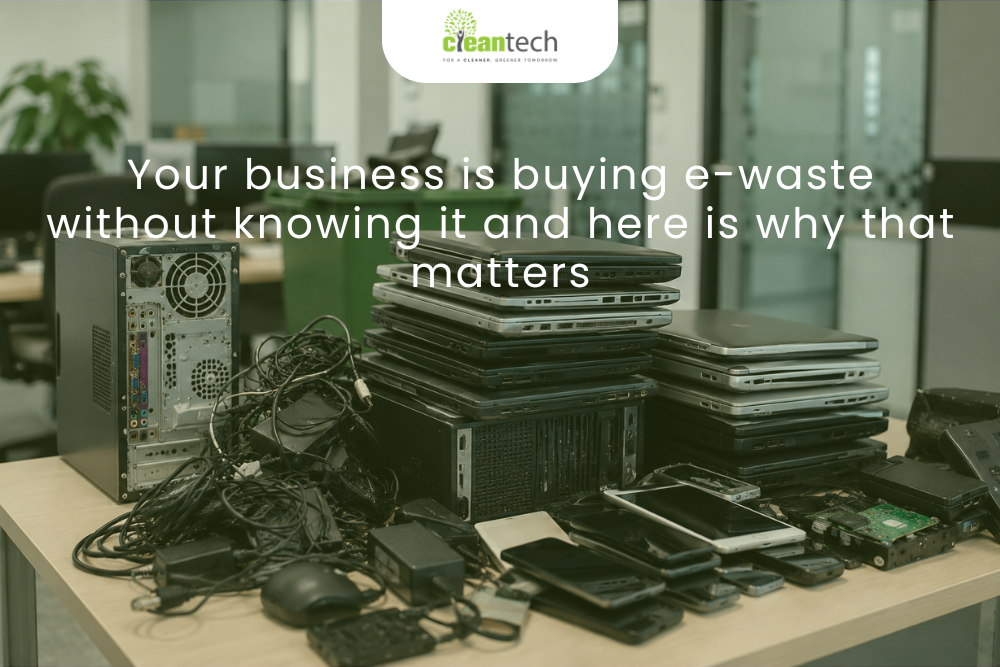
Most businesses buy tech just thinking, “okay, this will help us work better” or “it’s within budget, let’s go for it.” Pretty normal, right? But here’s the thing a lot of those devices end up becoming electronic waste way faster than expected. Sometimes it’s a laptop that starts slowing down after a year, sometimes it’s a printer that no one can fix, or some random office device that just stops getting updates.
And honestly, electronic waste management doesn’t really start when something breaks. It kind of starts from the moment you decide what to buy. Sounds a bit heavy, but yeah, it is what it is.
What Is E-Waste and Why Is It Growing?
E-waste basically means any electronic stuff you throw away when it’s no longer useful computers, phones, servers, chargers, batteries, office machines, all that.
Now the issue is, companies keep upgrading stuff more often than before. A new model comes, better specs, people replace old ones even if it still works fine. So the pile of e-waste keeps getting bigger and bigger.
And the problem is not just “trash”. Some of these devices have materials that are harmful, some still have value inside them, but they just get dumped or ignored. That’s why electronic waste management is becoming a big deal now, not just some optional thing anymore.
How Businesses Unknowingly Buy E-Waste
Most companies don’t actually plan to buy “bad” products. It just happens slowly.
Like, you see a cheaper laptop or device and think it’s a good deal. Saves money upfront, so why not? But then after a year or two, it starts acting up. No repair support, no spare parts, or it becomes outdated so fast that fixing it doesn’t even make sense.
So you replace it.
Then repeat.
And before you even notice, you’re stuck in this cycle where devices are basically treated as short-term use items. That’s how electronic waste builds up quietly in the background.
The Hidden Costs of Buying Future E-Waste
Financial Costs
At first, cheap and quick replacements feel like saving money. But if you really add it up, it gets expensive over time. Buying the same type of equipment again and again? Not so cheap anymore.
Also, when a device suddenly stops working, work stops too. People wait, systems go down, productivity drops. That hidden cost hurts more than the actual product price sometimes.
Good electronic waste management helps avoid this cycle by pushing you toward longer-lasting, more stable tech decisions.
Environmental and Reputation Costs
Every time a device is thrown away early, more waste gets created. Some of it gets recycled properly, but a lot of it doesn’t, or not fully anyway.
And people now actually care about this stuff. Clients, partners, even employees notice if a company is responsible or just careless with tech waste. So yeah, ignoring electronic waste management can slowly affect how your business is seen.
Not overnight, but it builds up.
Signs Your Business May Have an E-Waste Problem
There are some pretty simple signs, if you look closely.
Like, old devices just sitting in storage rooms because no one knows what to do with them. Or laptops getting replaced every couple of years even though they should last longer. Or repair costs being “not worth it” almost every time.
Also, if your suppliers never talk about recycling, sustainability, or take-back options that’s another red flag.
If this sounds familiar, your electronic waste management system probably needs some attention.
How to Make Smarter Technology Purchasing Decisions
This part is actually simple, even if people overthink it.
Before buying something, don’t just look at the price. Ask a few basic questions:
Will this last long? Can it be repaired easily? If something breaks, can parts be found?
Also check warranty, upgrade options, and if the company actually supports long-term use.
And yeah, working with suppliers who take responsibility for recycling or taking back old equipment makes life way easier later.
Small choices like this slowly improve your electronic waste management without making things complicated.
Turning Technology Procurement Into a Sustainability Advantage
Buying tech doesn’t have to be just “buy and use”. It can actually help your business look and perform better in the long run.
If you choose better-quality devices, use them longer, and plan what happens after they’re no longer useful, you reduce waste and save money at the same time. Not bad, right?
Good electronic waste management also helps with compliance and sustainability goals, but more importantly, it just makes operations smoother. Less chaos, less frequent replacements, more stability.
Conclusion
A lot of businesses are unknowingly creating e-waste just through normal purchasing habits. It’s not intentional, it just happens over time.
But the good news is, it’s fixable. Once electronic waste management becomes part of how you choose and manage technology, things start improving less waste, fewer surprise costs, and better long-term planning.
It’s really about thinking a bit ahead, not just what works today, but what will still make sense a year or two from now.