
If you live in an apartment in Sri Lanka, you’ve probably seen it happen at least once. The garbage area starts looking a bit full, someone leaves a bag outside the bin, then another person does the same, and within a day or two the whole place feels untidy. Add a little heat and humidity, and suddenly there’s a smell nobody wants to deal with.
The funny thing is, most apartment residents aren’t trying to create a mess. Usually the problem is much simpler: the building doesn’t have a proper system.
That’s why a Waste Management System Every Sri Lankan Apartment really needs isn’t just a set of bins. It’s a practical routine that makes waste disposal easy for residents and easy to manage for the building committee. When the system is clear, people tend to follow it. When it’s confusing, they don’t. Simple as that.
In this article, I’ll walk through what actually works in Sri Lankan apartment buildings, the mistakes that keep repeating, and a few realistic ideas that can make a noticeable difference without spending a fortune.
Why Apartment Waste Has Become Such a Big Issue in Sri Lanka
Apartment living has grown rapidly over the last decade, especially in cities like Colombo, Kandy, Gampaha, and Negombo. More families are choosing apartments because they’re convenient, secure, and often closer to work or school. But with more people living in one building comes one unavoidable thing: more waste.
A single household may not produce much rubbish in a day, but multiply that by 20, 50, or 100 apartments and the numbers add up quickly. Food waste, delivery packaging, plastic bottles, cardboard boxes, diapers, old household items it all needs somewhere to go.
Many buildings still rely on the old “one bin for everything” method. Honestly, that approach doesn’t work well anymore. Recyclables get contaminated, food waste starts decomposing, and collection teams have a harder job than necessary. Residents complain, management gets frustrated, and the cycle keeps repeating.
The real challenge isn’t that apartments create waste. Every home does. The challenge is managing that waste in a limited shared space where everyone is affected by everyone else’s habits.
Start with Segregation Inside the Apartment
This is the part that sounds boring, but it’s the foundation of the whole system.
Waste should be separated at home before it reaches the common collection area. A practical setup is usually three containers:
- Food and organic waste
- Recyclables such as plastic, paper, glass, and metal
- General waste that cannot be recycled
I know some people think this is extra work. In reality, it takes a few seconds once the habit is established. The bigger benefit is that recyclable materials stay clean, which means they can actually be recycled instead of ending up in landfill.
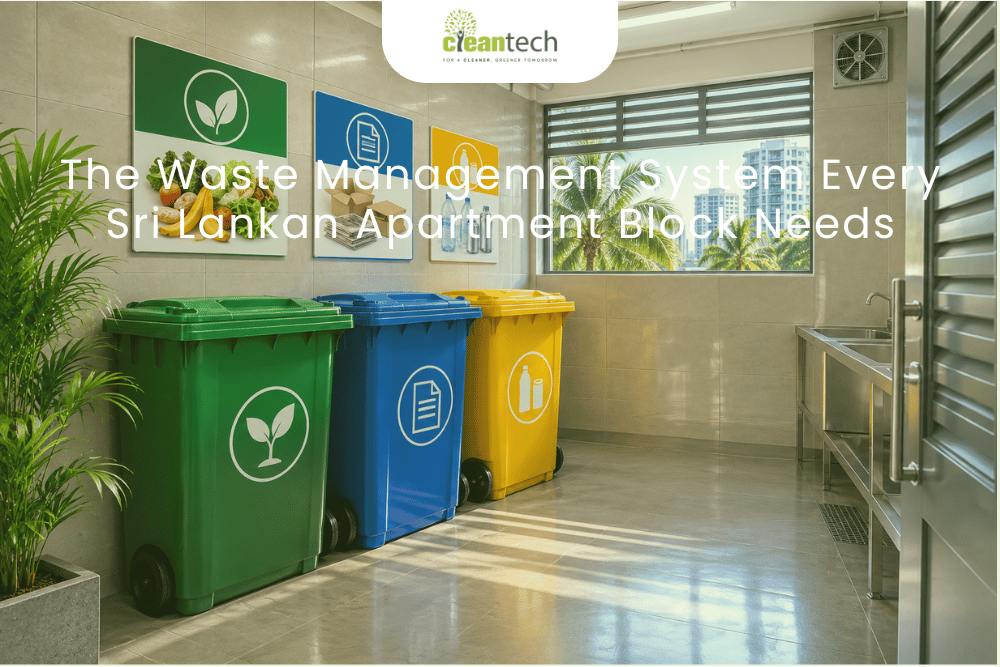
One small trick that helps a lot is using clearly labeled bins with different colors. When residents can identify the correct bin instantly, mistakes drop noticeably. It sounds almost too simple, but I’ve seen buildings improve just by changing labels and adding better signage.
The Garbage Room Matters More Than Most People Think
Let’s be honest. Many apartment garbage rooms are treated like an afterthought. They’re dark, poorly ventilated, difficult to clean, and often too small for the amount of waste produced.
A good waste storage area should be:
- Covered from rain and direct sunlight
- Easy to wash down
- Well ventilated
- Large enough for peak waste days
- Kept closed to prevent pests from entering
Collection frequency is just as important. In Sri Lanka’s climate, food waste starts decomposing quickly. If bins remain uncollected for several days, odors build up fast. Daily or near-daily collection for organic waste is ideal in larger apartment complexes.
And please, don’t underestimate cleaning. A quick wash of bins and floors every day prevents many of the smell and pest issues that residents usually complain about.
Recycling Should Be Easy, Not Complicated
One reason recycling programs fail is that they ask residents to do too much. Keep it simple.
Provide separate containers for common recyclable materials and make sure residents know exactly what can go into each one. A small poster with pictures works better than a long written notice that nobody reads.
Apartment management can also partner with local recycling collectors. In many parts of Sri Lanka, recyclable materials such as cardboard, paper, and certain plastics already have collection networks. The building doesn’t need to become a recycling company; it just needs to keep those materials separated and accessible.
Once residents see that the recyclables are actually being collected separately, participation usually improves. People are more willing to cooperate when they believe the effort has a real purpose.
Don’t Ignore Food Waste
Food waste is often the largest component of apartment garbage, especially in family buildings. Rice leftovers, vegetable peels, fruit scraps, tea leaves it adds up every day.
Where space allows, composting can be surprisingly effective. I’m not talking about a huge industrial setup. Even a small managed composting area for organic waste can reduce the volume of garbage significantly. The compost can be used for landscaping, rooftop gardens, or shared green spaces around the building.
Not every apartment complex has the space for composting, and that’s okay. The important thing is keeping food waste separate from dry recyclables so each stream can be handled properly.
Smart Features That Are Actually Useful
Apartment developers love to advertise “smart” features, but some are genuinely practical.
Sensor bins that indicate when they are nearly full can help maintenance staff avoid overflow. Waste compactors reduce the volume of garbage, which is useful in buildings with limited storage space. Simple digital maintenance logs can help management track collection schedules and identify recurring problems.
That said, technology should support the system, not replace basic management. A clean, well-organized waste room with regular collection is far more valuable than expensive equipment that nobody maintains properly.
The Benefits Go Beyond Cleanliness
A well-run waste management system changes the feel of an apartment building. Residents notice cleaner corridors, fewer odors, fewer insects, and a generally more pleasant environment. Visitors notice it too.
There are financial benefits as well. Better segregation can reduce waste handling costs, lower cleaning expenses, and minimize pest control problems. Over time, these savings can be significant for the management committee.
Environmental benefits matter too. Recycling and composting reduce the amount of waste sent to landfill, which is becoming an increasingly important issue in Sri Lanka.
A strong Waste Management System Every Sri Lankan Apartment should improve health, comfort, and sustainability at the same time. When those three goals align, the system tends to last.
What Apartment Management Committees Should Actually Do
I’ve worked with enough residential communities to know that residents rarely read long policy documents. Keep the rules short and visible.
A practical management approach includes:
- Clear bin labels and signage
- A simple one-page waste guide for residents
- Regular cleaning of waste areas
- Fixed collection schedules
- Occasional reminders through WhatsApp groups or notice boards
- A contact person for waste-related complaints
Communication matters more than people think. If collection is delayed for a holiday, tell residents in advance. If a recycling drive is planned, announce it early. Most residents cooperate when they’re informed.
Common Mistakes I See Again and Again
A few problems show up repeatedly in apartment buildings:
- Too few bins for the number of residents
- Mixing recyclables with food waste
- Leaving waste bags outside the designated area
- Irregular collection schedules
- Poor ventilation in storage rooms
- No resident education after new tenants move in
- Assuming “people should know” how the system works
That last one is a big mistake. Every building has different rules, and new residents often need guidance. A five-minute explanation when someone moves in can prevent months of confusion later.
Choosing the Right System for Your Building
A 12-unit apartment block and a 200-unit residential tower do not need the same setup. Before making changes, management should look at:
- Number of apartments
- Average daily waste volume
- Available storage space
- Collection frequency from local authorities or private providers
- Budget for maintenance
- Resident participation levels
Start with the basics and improve gradually. Trying to introduce a complicated system overnight usually fails. Small, consistent improvements are much more effective.
Final Thoughts
Good waste management isn’t glamorous. Nobody buys an apartment because the garbage room is well organized. But once people start living in the building, it becomes one of the things that affects daily life the most.
A Waste Management System Every Sri Lankan Apartment should be practical, easy to follow, and realistic for the people who actually live there. Fancy policies are useless if residents can’t understand them or if staff can’t maintain them.
The buildings that manage waste well usually don’t have magical technology or enormous budgets. They have clear rules, enough bins, regular collection, and a management team that pays attention. That’s really the secret.
If your apartment block is struggling with waste right now, don’t try to fix everything at once. Start with segregation, improve the collection area, communicate clearly with residents, and build from there. Those few steps alone can transform the cleanliness of a building more than most people expect.