
If you’re running a business in Sri Lanka, you’ve probably felt its costs keep changing. Sometimes it’s rent, sometimes transport, and often waste collection. It doesn’t look like a big expense at first. But when you check the monthly numbers, it’s there. Quietly adding up.
That’s why waste management costs in Sri Lanka have become something businesses can’t really ignore anymore. Many companies still depend on simple garbage disposal. And honestly, that’s understandable. It’s easy. You collect the waste, it’s taken away, and you move on.
But the real question is is that the most cost-efficient way in the long run? Or is there a better option?
Let’s look at both sides in a simple way.
Understanding Garbage Disposal
Garbage disposal is the traditional method. Waste is collected and sent directly to landfill sites. There’s no sorting, no internal system, and not much planning required. That simplicity is one of the main reasons businesses choose it.
It feels straightforward. And in busy operations, simplicity matters.
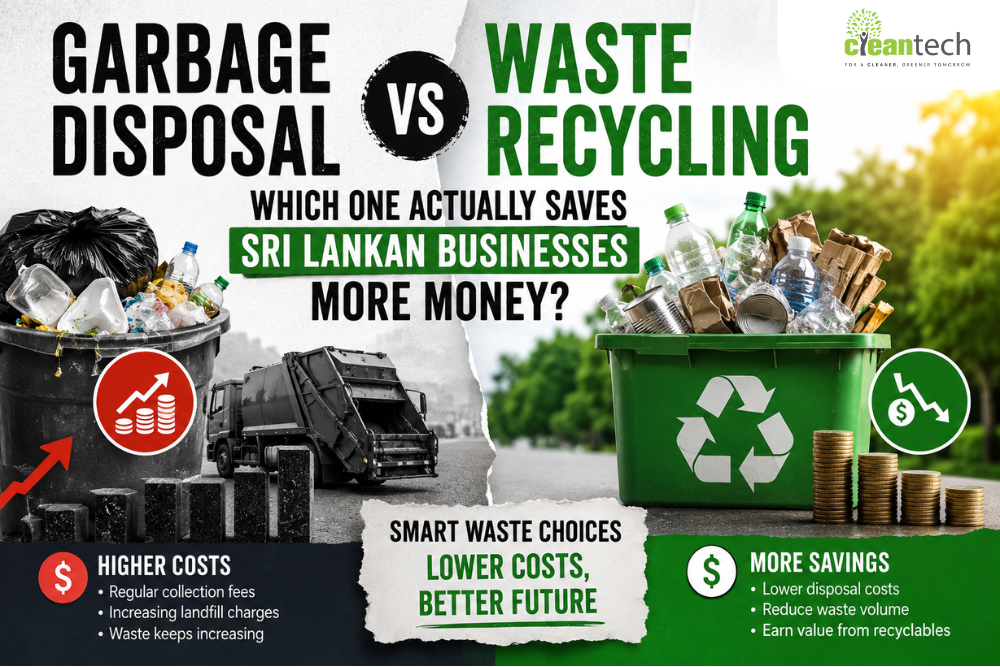
However, when we think about waste management costs in Sri Lanka, disposal is not always as cheap as it seems. There are regular collection charges, transport costs, and sometimes additional fees depending on waste volume. If your business grows, your waste usually grows too. And that means higher expenses.
Also, disposal does not reduce waste. It only removes it. So the amount of waste your company produces stays the same. Over time, that can lead to increasing costs especially if landfill fees rise in the future.
So yes, it works. But it doesn’t really solve the cost problem.
Understanding Waste Recycling
Recycling is slightly different in approach. Instead of sending everything to landfill, waste materials are separated so they can be reused or processed again. Things like paper, plastic, metal, and glass are common examples.
At first, some businesses thought recycling would be complicated. But in reality, it usually starts with very small steps. Separate bins. Basic staff guidance. A simple internal system. That’s it.
When recycling is done properly, it reduces the total waste going to landfill. And that directly affects waste management costs in Sri Lanka. Less landfill waste often means lower disposal fees and sometimes fewer collections.
There is also another benefit people sometimes overlook. Certain recyclable materials can have value. They can be reused or sold, depending on the condition and type. It may not create major profit, but it can help reduce overall expenses a little.
Recycling is not just about being environmentally friendly. It can actually support financial planning too.
Cost Comparison: Garbage Disposal vs Waste Recycling
| Point | Garbage Disposal | Waste Recycling |
| Setup | Very easy, no system needed | Needs waste sorting system |
| Effort | Low effort | Small effort at the beginning |
| Waste Amount | Waste stays the same | Waste is reduced |
| Collection Cost | Can stay high or increase | Can decrease over time |
| Long-Term Cost | May become expensive | Usually saves more money |
| Extra Benefit | No extra benefit | May earn value from recyclable materials |
Which Option Saves Sri Lankan Businesses More Money?
To be fair, every business is different. A small office will not have the same waste pattern as a factory or hotel. So results can vary.
But in general, recycling tends to save more money over time.
Garbage disposal focuses on removing waste. Recycling focuses on reducing waste. And when waste is reduced, waste management cost in Sri Lanka usually becomes more manageable.
For businesses that produce regular or large amounts of waste, structured recycling systems can make a noticeable difference. Not immediately dramatic but steady and consistent savings.
And that kind of stability is important for long-term planning.
It’s not only about today’s budget. It’s about future expenses too.
Environmental and Legal Considerations in Sri Lanka
Another thing to think about is responsibility. Environmental awareness in Sri Lanka is growing. Regulations are improving. Businesses are expected to manage waste properly.
Improper waste handling can lead to penalties or operational issues. That can increase costs unexpectedly.
By adopting recycling practices, companies can reduce risk while keeping waste management cost in Sri Lanka under better control. It also shows that the business is responsible and forward-thinking.
Customers and partners notice these things more than we sometimes think. Sustainable practices can improve brand reputation. And that can indirectly support business growth.
So recycling supports both compliance and credibility.
Practical Steps for Businesses to Reduce Waste Costs
You don’t need a complex system to start improving waste management. In fact, simple steps often work best.
First, understand your waste. A basic waste audit can show what type of materials you produce the most. Sometimes businesses are surprised by the results.
Next, introduce waste segregation. Even separating recyclables from general waste can reduce landfill volume. That alone can influence waste management costs in Sri Lanka over time.
Training staff is also important. It doesn’t need to be formal or long. Clear instructions and consistent reminders are usually enough.
Finally, working with experienced waste management providers can help streamline the process. Proper guidance makes recycling easier and more effective.
Small improvements, repeated consistently, can lead to real savings.
Conclusion
Waste management cost in Sri Lanka is not something businesses should ignore anymore. Costs are gradually rising, and landfill space is limited. So the way waste is handled really matters.
Garbage disposal is simple and practical. It works well for basic needs. But recycling usually provides stronger long-term financial benefits because it reduces waste volume and supports better cost control.
For many Sri Lankan businesses, recycling is not just an environmental decision. It’s a practical financial strategy. With proper planning and steady implementation, companies can manage expenses more efficiently and prepare for the future with more confidence.
In the end, the best choice depends on your operations but if the goal is long-term savings, recycling is often the smarter direction.