
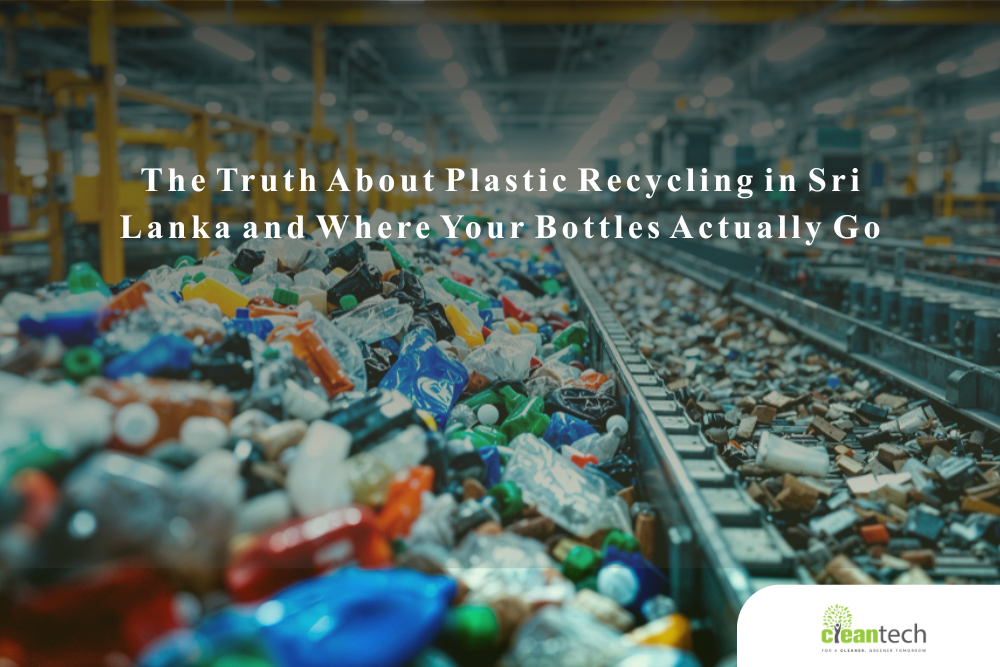
You finish a drink, maybe water or a soft drink, and you toss the bottle into a bin. If it’s a recycling bin, that feels even better. Like, okay I did my part today.
But here’s the thing… ResPlastic Recycling in Sri Lanka doesn’t always work the way we imagine. Not exactly, at least. There’s this idea that once plastic goes into the “right” bin, it smoothly turns into something new. In reality, the journey is a bit messy, sometimes confusing, and honestly sometimes it just stops halfway.
People are definitely more aware now. You see more conversations about waste, climate, sustainability… all that. Still, knowing about recycling and understanding what actually happens are two different things. So yeah, it’s worth asking where does your bottle really end up?
The Current State of Plastic Waste in Sri Lanka
Plastic is everywhere. In shops, homes, streets you can’t really avoid it. And in Sri Lanka, the amount of plastic waste being generated every day is… quite high. Especially in cities where consumption is faster and, well, more convenient.
The system for ResPlastic Recycling in Sri Lanka is there, but it’s not perfect. Not even close. In some urban areas, waste collection is regular, somewhat organized. But even there, things can get inconsistent. In rural places, it’s more uneven. Sometimes waste isn’t separated at all. Sometimes it just piles up.
So, the country isn’t lacking effort, it’s more like the system is still catching up with the scale of the problem. And that gap shows.
How Plastic Recycling Actually Works
On paper, ResPlastic Recycling in Sri Lanka follows a simple path: collect, sort, process. Easy to say. Not always easy to do.
Plastic waste is collected from different places, homes, offices, and streets. Then it’s sorted by type, because not all plastics can be recycled the same way. After that, the usable ones are processed into raw material for new products.
But here’s where things get tricky. If the waste is mixed or dirty from the start, the whole process becomes harder. Sometimes it fails completely. So yeah, recycling doesn’t just depend on the system, it starts with how we throw things away.
Collection and Sorting Process
Waste collection in Sri Lanka is kind of a shared effort. There are municipal services, yes, but also informal workers, waste pickers, small collectors who do a big part of the job. Maybe bigger than most people realize.
The problem is, waste often isn’t separated properly at home. Food waste, plastic, everything goes into one bag. And once plastic is contaminated, it’s much harder to recycle. This slows down the whole ResPlastic Recycling in Sri Lanka process. Sometimes, it stops it completely.
So, even before recycling begins, there’s already a challenge.
Recycling Facilities and Processes
After sorting, plastics go to recycling facilities. There, they’re cleaned, cut into small pieces, melted, and turned into raw material. That material can then be used again, maybe in packaging, maybe in other products.
But the ResPlastic Recycling in Sri Lanka system mostly relies on basic methods. Advanced recycling technology? Still limited. Also, not all plastics can be processed locally. Some are exported. Others… just don’t get recycled at all.
And that’s a bit frustrating, if you think about it.
Where Your Plastic Bottles Really Go
So, let’s talk about your bottle. The one you just threw away. Where does it go?
In the ResPlastic Recycling in Sri Lanka system, some bottles, especially PET ones do get recycled. They’re collected, cleaned, and turned into new products. That part works, at least sometimes.
But not every bottle makes it there. Some end up in landfills. Some slip into the environment, rivers, drains, and open land. And yes, some are shipped to other countries for recycling.
It’s not one clear path. It’s multiple outcomes. Which means… recycling is happening, but not always in the way we expect.
Why Much of Plastic Waste Is Not Recycled
This is the part people don’t always want to hear. A large portion of plastic waste doesn’t get recycled in the ResPlastic Recycling in Sri Lanka system.
Why? A few reasons. Contamination is a big one, dirty plastic can’t be processed easily. Then there’s limited infrastructure. Not enough facilities, not enough capacity. And also, money. Some plastics are just not worth recycling because the cost is higher than the value.
So even if you throw something in a recycling bin, there’s no guarantee it will actually be recycled. Not always, anyway.
Environmental Impact of Mismanaged Plastic Waste
When plastic isn’t handled properly, it doesn’t just disappear. It builds up. In rivers, on beaches, in drains you’ve probably seen it yourself.
Weak points in ResPlastic Recycling in Sri Lanka contribute to this. Plastic waste harms animals, pollutes water, and slowly breaks down into microplastics. These tiny particles enter the food chain. And eventually… they come back to us.
It’s not always visible right away. But over time, the impact grows. Quietly, but seriously.
Government Policies and Recycling Initiatives
There have been efforts to improve ResPlastic Recycling in Sri Lanka. The government has introduced bans on certain plastics and created policies to manage waste better.
There are also partnerships with private organizations and community-level programs. Awareness campaigns are becoming more common too.
But implementation isn’t always consistent. Some areas move forward faster than others. So yes, progress is happening but it’s not evenly spread across the country.
What Individuals Can Do to Improve Recycling
Here’s the part that’s easy to overlook: what you do actually matters. Maybe not in a huge way all at once, but over time, it adds up.
ResPlastic Recycling in Sri Lanka doesn’t just depend on systems. It depends on people. On habits. On small daily decisions that seem minor but aren’t.
Simple Daily Habits
Separating your waste. Rinsing plastic containers. Using fewer single-use items. These are small things, honestly. But they make recycling much more effective.
It’s not about being perfect. Just being a bit more mindful. That’s enough to start.
Supporting Sustainable Practices
You can also support ResPlastic Recycling in Sri Lanka by choosing products made from recycled materials. Or supporting businesses that focus on sustainability.
Joining local recycling programs helps too. These actions encourage a system where materials are reused instead of wasted. It’s not a complete solution, but it’s progress.
The Future of Plastic Recycling in Sri Lanka
Looking ahead, the future of ResPlastic Recycling in Sri Lanka feels… cautiously hopeful. There’s growing awareness, better conversations, and some investment in new technology.
If infrastructure improves and people continue to change their habits, things could get better. Not overnight, of course. But gradually.
And maybe that’s how real change happens: slow, steady, a bit imperfect.
Conclusion
At the end of the day, recycling isn’t as simple as it seems. The system behind ResPlastic Recycling in Sri Lanka has its strengths, but also its flaws.
Still, that doesn’t mean your effort doesn’t count. It does. Every small action separating waste, reducing plastic use, making better choices it all contributes to something bigger.
So next time you throw away a bottle, maybe pause for a second. Think about where it might go. Because the story doesn’t end in the bin… it kind of starts there.