
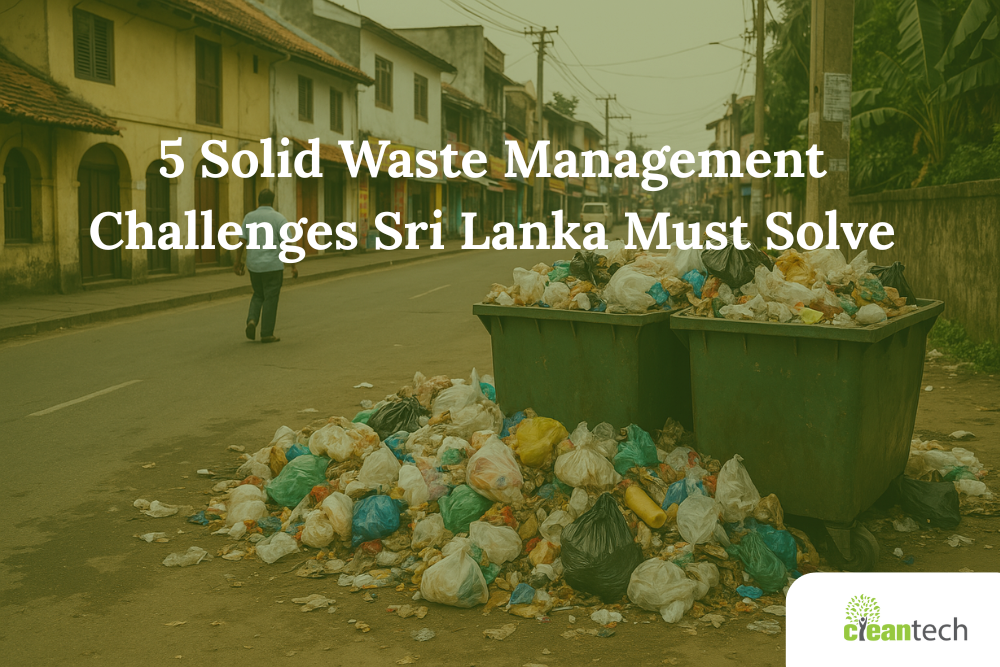
Solid waste is one of those problems that’s easy to ignore until it piles up in front of you. In Sri Lanka, the issue is growing sharper each year. Urbanization is moving fast, consumption patterns keep shifting, and the amount of garbage created per day is climbing. Landfills fill up, cities struggle, and rural areas too are starting to feel the heat.
When you look closer, the problems are not just about volume. They are about systems, habits, and policies that don’t fully line up. Below, we’ll walk through five major waste management challenges Sri Lanka must face head-on if it wants a cleaner and healthier future.
1. Rapid Urbanization & Rising Waste Volumes
Sri Lanka’s urban population has been rising steadily. With that comes higher amounts of daily waste food scraps, packaging, e-waste, plastics, and more. Cities like Colombo and Kandy see tons of trash collected every single day. The problem? Most of it still ends up in dumpsites or overfilled landfills.
Space for landfills is running short. Some are already overflowing or causing environmental risks like leachate leaking into groundwater. And as lifestyles change, the type of waste is changing too. More plastics, single-use items, and electronics add layers of complexity to what used to be mostly organic waste.
The challenge here isn’t just collection. It’s building a system that can keep up with rising volumes. Without better planning and stronger infrastructure, urban centers will keep drowning in their own trash.
2. Lack of Proper Waste Segregation At Source
One of the biggest barriers to progress is still waste segregation. In many households and even businesses, waste of all kinds of food, recyclables, and hazardous items get mixed in the same bag. Once that happens, recycling becomes way harder. Composting too.
Segregation at the source is simple in theory but is difficult in behavior. This requires a cultural change. People need to take the extra moments to resolve the waste. Some communities have shown that it works. With consciousness and the right room, organic, recycled and remaining waste can be excreted in the homes.
But overall, this isn’t happening enough. Trucks often mix it again during collection, which discourages people from bothering at home. Until Sri Lanka solves this, many opportunities for recycling and composting will keep slipping through the cracks.
3. Limited Recycling & Resource Recovery Facilities
Even when segregation is done properly, the system struggles with what comes next. Recycling plants and material recovery facilities are too few and too concentrated in certain urban areas. Rural districts rarely have access to proper recycling centers.
That means a lot of recyclable waste simply has no place to go. E-waste is an even bigger headache. Old electronics pile up in homes or end up in informal disposal channels, often unsafe for workers and the environment. Hazardous waste also lacks specialized treatment facilities across most of the island.
This gap limits Sri Lanka’s ability to move toward a true circular economy. The raw materials are there in the form of waste, but without enough infrastructure, they’re lost to landfills instead of reused or remade.
4. Policy Gaps & Weak Enforcement
On paper, Sri Lanka has policies to guide better waste management. Regulations exist for recycling, for managing plastics, even for hazardous materials. But the gap between rules and reality is wide.
Enforcement is weak. Some municipalities implement waste separation, others don’t. Informal waste collectors often operate outside official frameworks. Producers who should take responsibility for packaging waste often escape without real accountability.
The idea of extended producer responsibility (EPR) gradually goes into political discussions, but strong implementation is still missing. Without continuous enforcement and monitoring, even good laws do not have much effect. Strengthening politics and ensuring that in practice it works is still one of the most difficult challenges.
5. Public Awareness & Behavioral Change
Waste management is not just about the system – it is also about people. And in Sri Lanka, public awareness in many areas is still low. Many people do not think twice about bouncing mixed waste in a trash can, or even throw it out in open areas.
These habits require more than just rules to change these habits. It requires stories of education, ongoing campaigns and visible success that show the benefits of better waste practice. Schools, workplaces and community houses can all play a role.
Behavioral changes are slow, but that is also the basis. Without it, even the best systems stumble. With this, everything else – recycling, livestock manure, politics – is a better chance of success.
Opportunities & The Way Forward
Every challenge also hides an opportunity. The growing waste stream can fuel recycling businesses, create thousands of jobs, and reduce expensive imports by reusing local materials. Composting can support agriculture while cutting dependence on chemical fertilizers. Waste-to-energy can reduce landfill pressure while adding renewable power to the grid.
The key is alignment: households doing their part, businesses innovating, and the government providing strong frameworks. If those three layers move together, Sri Lanka could flip the waste problem into a sustainability success.
Conclusion
The waste issue is urgent. Overflowing landfills, poor segregation, missing facilities, weak enforcement, and low awareness are the waste management challenges Sri Lanka must solve quickly.
But urgency can also drive innovation. With a circular economy mindset, and with stronger partnerships between people, policy, and business, the country can turn waste into a resource. That shift won’t just clean up streets and cities. It will shape a healthier, more resilient future for everyone.
Because unmanaged waste harms the environment, creates health risks, and costs the economy in the long run.
Segregation at source is one of the hardest, since without it recycling and composting both fail.
More people in cities means more daily garbage, and also more complex waste types like plastics and e-waste.
It keeps recyclables clean, makes composting possible, and reduces the load on landfills.
Separate waste at home, support recycling programs, compost organics, and reduce single-use plastics.
Recycling helps, but it must be combined with composting, policy enforcement, and behavior change to really work.