alfonso-navarro-qph7tJfcDys-unsplash

How Technology is Improving Solid Waste Management in Sri Lanka

Sri Lanka is facing an escalating solid waste management crisis, driven by rapid urbanization, rising tourism, and increased consumption patterns across the country. With more than 7,000 tons of waste generated daily, much of it ends up in open dumps or poorly managed landfills, posing serious risks to public health and the environment. Major cities like Colombo are under mounting pressure to manage the growing volume of household, commercial, and industrial waste efficiently. Traditional collection and disposal methods are proving inadequate, leading to overflowing dump sites, pollution, and unsanitary living conditions. In response, Sri Lanka is beginning to explore and adopt modern technologies—such as smart bins, waste-to-energy systems, and data-driven planning tools—to revolutionize how waste is collected, processed, and repurposed. These tech-driven innovations offer promising, sustainable solutions to transform solid waste management in Sri Lanka and support a cleaner, healthier future.

Current State of Solid Waste Management in Sri Lanka

Rapid urbanization, population growth and the growth of consumption are creating serious challenges to solid waste management in Sri Lanka. The central environmental authority (CEA) has recorded that the country produces a daily total of over 7,000 tons of solid waste of which the Western Province produces almost 60 percent of it. Wastes in most cases are collected by the local authorities but they are managed and disposed properly in about 40 percent of our cases and the others are usually dumped in open spaces, river beds or in uncontrolled landfills. The source separation is still very weak and the infrastructure of recycling is inadequate over the majority of the country. This dependence has contributed to the destruction of the environment and creation of health risks through the use of old modes of collection followed by filling the landfill sites beyond their capacity like the infamous Meethotamulla dump. Sri Lanka has not been able to manage waste adequately because of the absence of effective mechanisms in the waste separation, composting or high level waste disposal processes. The issues raise the necessity of applying modern technology-driven strategies to increase efficiency and safety of solid waste management in Sri Lanka.

Role of Technology in Transforming Waste Management

The current use of technology is bringing about a revolutionary change in upgrading waste management systems in the world that are providing new ways of collecting, segregating, recycling and disposal of wastes in an efficient manner. The use of technology to enhance sustainability in the city is apparent in the systems, which use the automated processes, data analytics, smart infrastructure, and artificial intelligence in waste management. Sri Lanka has become a nation that is increasingly moving towards the implementation of digital and smart technologies. The municipalities, the businesses and the green organizations are starting to consider options that are aligned with the international standards of best practices. This involves the incorporation of technology that will allow streamlining the operations, decreasing manual jobs, and enhancing environmental performance. Introducing smart systems can be regarded as the positive step to sustainable urban development as the country is struggling with the increasing material waste-related problems. Technologies like smart bin, real-time monitoring, and waste to energy technology, Sri Lanka is slowly adopting to make solid waste management cleaner and more efficient in the future in Sri Lanka.

Smart Waste Collection and IoT Integration

Smart technologies such as bins with the use of IoT, sensors, and GPS tracking should be mentioned among the most promising solutions of solid waste management. These devices assist in the real-time monitoring of bin filling levels, as well as the optimization of the collection routes, minimizing the number of useless visits and fuel use. In Sri Lanka, this practice is in the early stages of development where in urban municipalities they are trying out smart bin systems in lieu of overflowing garbage and ineffective collection schedules. Or, to give an example, Colombo and a number of local councils initiated pilot projects to experiment with IoT-based waste monitoring to deliver more efficient operations. The advantage of these smart waste systems is timely pickups, the decreased labour expenditure, and increased hygiene since there are less risk of overflow and odours. Through connected devices data, wastage management authorities will be able to make decisions that are informed thus offering better services but at the same time supporting in maintaining a sustainable environment in solid waste management in Sri Lanka.

Waste-to-Energy (WTE) Technologies

Waste-to-Energy (WTE) is a multi-generation technology that uses the process of converting non-recyclable solid waste to other forms of usable energy e.g. electricity or heat. In this process energy is normally recovered through combustion, gasification or pyrolysis using waste materials which would otherwise be disposed of in landfills. WTE is picking up in Sri Lanka as a green solution to the mounting solid waste problem in the country. An excellent example is the Kerawalapitiya Waste-to-Energy Plant, which is one of the largest in the country and which is meant to handle up to 700 tons of municipal wastes daily and produce 10 megawatts of electricity. The existence of these WTE facilities not only minimizes the amount of waste that ends up in the land-filled sites but also assists in controlling the amount of energy that is demanded in this country using renewable energy sources. WTE technologies can play a major role in developing a circular economy by reducing landfilling and generating energy with waste and hence it is a proactive way of managing solid waste in Sri Lanka.

Digital Platforms and Mobile Apps

In Sri Lanka, the use of digital platforms and mobile applications is gradually becoming more common in order to facilitate people’s involvement and optimize the process of solid waste management. Such tools will enable residents to report uncollected trash, plan waste collection and keep track of their recycling programs in real time. Other local administrations have created special municipal applications, where residents can get access to garbage collection timetables and have an opportunity to file complaints which are then directly sent to the authorities. Also, mobile solutions were introduced by NGOs and entities in the technology market, to open the industry to better, and transparent organization, tying-in householders with material collectors where they can sell the material that is recyclable. Awareness campaigns and environmental education are also promoted using these digital platforms that have been known to foster better habits in the disposal of wastes among the populace. As the government promotes smart city projects, assimilation of such applications is turning out to be a fruitful approach to make operations more exacting and enhance societal involvement in solid waste management in Sri Lanka.

Data Analytics & AI for Waste Forecasting

Artificial intelligence (AI) and data analytics are transforming solid waste planning and management in municipalities of Sri Lanka. With the help of historical data, trend in population and seasonal waste trend, the local authority can now accurately predict generation of waste beforehand, which results in improved planning and resource deployment. Predictive analytics assists in targeting areas with high wastes, proper collection scheduling, and elimination of unwarranted use of fuels which makes operations cost efficient. Zoning strategies are, as well, supported by AI-powered tools, enhancing the decision-making process on the issue of waste management in cities. Some municipal councils are however examining data-based strategies with technology companies and universities, although they remain early days. Such technologies have the potential of promoting sustainability in the long-term by dropping optimum operation, improved service delivery and environmental impact on the ecosystem hence becoming a key asset at the future of solid waste management in Sri Lanka.

Environmentally-friendly Technology on recycling

Sri Lanka is slowly embracing the best recycling technologies in dealing with the rising cases of waste and in a bid to maintain the sustainability of the environment. Such innovations as plastic-converted to fuel plants are now active in places like Kerawalapitiya and are using non-recyclable plastics as a source of energy like furnace oil and bio-coal. At places such as the Karadiyana Waste Processing Plant, organic waste in the form of food and agricultural refuse is turned into biogas and fertilizer through composting equipment and anaerobic digestion installations, which cuts the need on landfills by a huge margin. Besides, the technology-based solutions, such as waste sorting machines based on AI and computer vision systems to separate compost, are also piloted to enhance the reuse process. The innovations are being driven specifically by local startups and public-private partnerships that are putting Sri Lanka in a position to move under a more circular concept. Not only do the eco-friendly technologies minimize green impact, they also generate an economic value and are an essential part of the contemporary solid waste management in Sri Lanka.

Conclusion

Technology is playing a vital role in reshaping solid waste management in Sri Lanka, offering innovative, efficient, and eco-friendly alternatives to traditional systems. From smart collection methods and IoT integration to waste-to-energy plants and AI-powered forecasting, these advancements are helping municipalities overcome long-standing waste challenges. The rise of digital platforms, advanced recycling technologies, and data-driven planning demonstrates the country’s growing potential to transition toward a more sustainable and circular waste economy. However, for these solutions to reach their full impact, stronger investment, public awareness, and supportive government policies are essential. By embracing and accelerating the adoption of smart waste management technologies, Sri Lanka can build a cleaner, healthier, and more resilient future for its cities and communities.
men-garbage-truck-city-container-collection-service-public-pollution-recycling-waste-management-trash-community-worker-teamwork-plastic-new-york-junk-refuse-dirt

Transforming Urban Hygiene: How Solid Waste Management is Evolving in Sri Lanka

Sri Lanka’s rapid urbanization has led to a significant increase in solid waste generation, especially in densely populated cities like Colombo, Kandy, and Galle. With more people living in urban areas, the pressure on waste management systems has grown, directly impacting urban hygiene, public health, and the environment. Overflowing landfills, open dumping, and poor waste handling have made clean city living a growing challenge. However, this has also triggered positive change. Across Sri Lanka, efforts are underway to modernize waste systems, introduce sustainable practices, and engage communities in cleaner living. This article explores how solid waste management in Sri Lanka is evolving, highlighting the key drivers, challenges, innovations, and success stories that are shaping a cleaner and healthier urban future.

The Current State of Solid Waste Management in Sri Lanka

The daily generation rate of solid waste in the country is about 7,000 to 10,000 metric tons, and in the Western Province alone, it produces close to 60 percent of those generated in the country. In large cities such as Colombo and Kandy, there exist increased levels of waste which consists of organic matter by larger quantities (65-80 percent) and then plastics, paper, e-waste, and metal. In spite of that, the proper collection of waste reaches 30-40 percent only, with the majority of it going to open dumpsites, posing serious health and environmental dangers. The problems are excessive use of landfills, inappropriate segregation at source, inadequate infrastructure as well as low awareness among the citizens. There is an increase in the e-waste and plastic pollution in cities, and there is a limited recycling system that makes the situation a problem. Such barriers identify the necessity of sustainable waste solutions in Sri Lanka.

Key Drivers of Transformation in Waste Management

A mix of policy reforms, institutional efforts and technology innovations are transforming the solid waste management in Sri Lanka. The National Solid Waste Management Policy has been essential in establishing firm stewardship on sustainable disposal of waste, source segregation of waste as well as adoption of environmentally friendly ways. The powers of local authorities and urban councils to enforce regulations, to improve on the collection systems and to interact with the communities have been enhanced with the aim of enhancing urban hygiene. The other contribution has come on the part of the public-private partnerships (PPPs) and active participation of NGOs as they introduce investment, technical capabilities, and support the creation of cleaner cities at the grass roots. Besides, the urban centers are witnessing renewed transformation with regard to waste management due to the implementation of technology. Smart trash cans, waste tracking systems with GPS built-in, and decentralized composting machines are only some of the newest technologies that make cities less dependent on landfills and move toward more cost-effective and environmentally friendly waste management systems. All these drivers are also establishing a firm base of long-term sustainability in the urban environments in Sri Lanka.

Sustainable and Innovative Practices Emerging

There is a growing trend of sustainable and innovative waste management in Sri Lanka. The segregation of wastes at source is done at the school levels and also through community-based efforts that are contributing towards landfill pressure. Representing a shift towards zero-wasted living, composting techniques have gained currency among many households and local councils. Sorting efficiency is enhanced by the launching of Material Recovery Facilities (MRFs) in such cities as Colombo and Kandy. In urban areas also there is an extension of recycling and upcycling programs whereby plastic and paper wastes are transformed into consumable products. Also improved systems of e-waste and hazardous wastes are also being formed in terms of public and private partnership and licenced collection networks. The moves are indications of an increasing concern towards environmental sustainability and pollution-free cities in Sri Lanka.

Case Studies from Sri Lankan Cities

A number of cities in Sri Lanka are advancing innovative methods towards bettering solid waste management. Its capital city, Colombo has introduced better collection mechanisms and Material Recovery Facilities (MRFs), but still has to grapple with plastic problems, illegal dump sites and reduced landfills. Pilot projects in smaller towns (such as Galle, Kandy and Negombo) working on source segregation, composting, and community recycling are also doing well. Such as the door-to-door awareness creation conducted by Kandy and the buy-backs of the plastics by Negombo helping in decreasing the volumes of wastes. NGOs-backed community initiatives have been also effective, and the residents have been successfully appealed to keep waste separated, compost organic waste, and limit the use of single-plastic waste. Such local achievements indicate an enormous gain in urban hygiene and environmental health in Sri Lanka, which may be accomplished through the combination of collaboration and education and local solutions.

The Role of Citizens and Education

The paradigm of changing patterns of waste management in Sri Lanka has a key role to do with the citizens. The policy and sustainable practices need public awareness and change behaviors, particularly, in an urban setting. Education facilities are taking the initiative and initiating campaigns on waste disposal, recycling, and green practices, to make the young generation environmentally responsible in the long run. Also, there are mobile apps and digital solutions to educate society, share tips on waste management, and also report about illegal trash or missed collection. These are making the citizens stronger in taking part in ensuring cleaner cities. With the increasing awareness, community involvement will also emerge as an effective tool towards a cleaner and greener Sri Lanka.

Conclusion

Sri Lanka’s journey in solid waste management is gradually shifting from outdated, unsustainable practices to more innovative, community-driven, and eco-friendly solutions. From government policies to local pilot projects and digital awareness campaigns, the country is making progress toward cleaner, healthier urban environments. This transformation highlights the critical link between effective waste management, urban hygiene, and long-term sustainability. However, lasting change depends on the continued collaboration of policy-makers, private businesses, and everyday citizens. By embracing responsible habits, supporting green initiatives, and demanding better infrastructure, everyone has a role in shaping a cleaner future. Now is the time to act—to rethink waste, invest in sustainable solutions, and build cities where people and the planet thrive together.

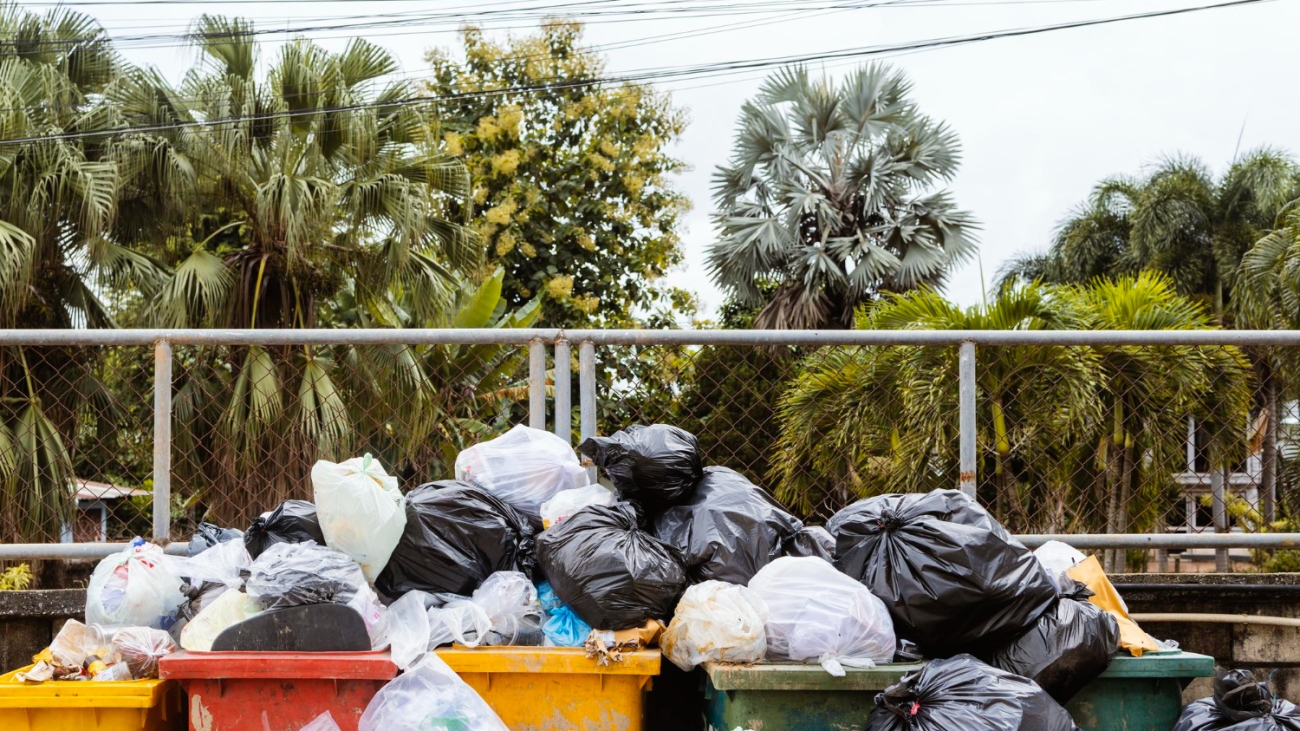
Overflowing trash bins filled with plastic bags and garbage in an outdoor area

Best 5 Eco-Friendly Waste Management Practices for Hotels & Resorts in Sri Lanka

Sri Lanka’s booming tourism industry significantly contributes to the country’s economy but also presents environmental challenges, especially in waste generation and management. Hotels and resorts produce large amounts of waste daily, which, if not handled properly, can harm local ecosystems and contribute to pollution. This makes eco-friendly waste management Sri Lanka a crucial priority for sustainable hospitality. As travelers become increasingly aware of their environmental impact, the demand for green accommodations is rising steadily. Hotels adopting sustainable waste management practices not only protect the beautiful natural surroundings but also attract eco-conscious guests seeking responsible travel options. In this blog, we’ll explore the best 5 eco-friendly waste management practices that hotels and resorts in Sri Lanka can implement to reduce their footprint and lead the way in sustainable tourism.

1. Composting Organic Waste On-site

The practice of composting in hotels is an effective method of minimizing environmental impact with a view to encourage sustainability in the hospitality industry in Sri Lanka. Using leftover food in the kitchen and garden trimmings to make natural fertilizer will help the hotels to reduce the waste to the landfills and the use of greenhouse emission. An efficient hotel compost system can help not only to promote on-site landscapes and gardens but also to involve guests into eco-friendly practices. Even some eco-resorts give away the surplus of the compost to local farms or communities and this leads to the development of stronger local relations. As an example, Jetwing Vil Uyana has already undertaken the on-site composting as a part of its green initiatives as eco-friendly waste management in Sri Lanka may be practical and effective. Composting can be a cheap and highly effective implement given that they are professionally trained and well planned in order to ensure that the hotels utilize them so as to go green and attract more environmentally conscious tourists.

2. Waste Segregation and Recycling Stations

The segregation of wastes in hotels is very important in effecting pro-environmental management of wastes in the hospitality sector of Sri Lanka. Hotels can simplify the separation of plastic, paper, glass and organic waste by offering a color-coding to efficiently recycle these materials through the provision of specific recycling stations to both staff members and visitors. Implementing recycling infrastructure in hotel rooms, lobbies and dining outlets, which include multilingual sign cards, will promote appropriate recycling and will enhance environmental awareness to the international tourist. Such systems not only enhance recycling precision, but it also minimizes overall trash disposed in landfills. Utilizing good local recycling companies would guarantee that materials sent in are properly processed and re-used. This has been one of the ways that many eco aware resorts in Sri Lanka have embraced as part of its eco friendly waste management strategy Sri Lanka. Waste segregation is a smooth and easy process that can be institutionalized through regular training and signage thus improving sustainability efforts as well as guest satisfaction.

3. Reducing Single-Use Plastics

It is critical to cut single used plastic in hotels in an attempt to encourage the use of recycling methods in Sri Lanka. Hotels can make such radical change by getting rid of the usual plastic elements like bottles, straws, and disposable packaging. Most progressive properties are now installing filtered water outlets, coined glass bottles and even offer toiletries in refillable dispensers rather than mini-plastic bottles. Not only are these changes environmentally friendly, but also will attract eco-traveller groups. Use of biodegradable types of hotels, including compostable packaging, natural fiber bags, all aid in the bid to reduce wastes. In order to be successful, hotels are also to conduct guest education campaigns by inserting signs in rooms or sending digital messages, which inform guests about engaging in plastic-free behaviors. By limiting plastic consumption, hotels contribute to implementing the overall eco-friendly waste management Sri Lanka strategy such as reducing the cost of disposal, being in line with local environmental policies, and uplifting their sustainable branding.

4. Training Staff on Green Waste Handling

A motivated staff that is well informed on the subject is essential in regard to proper green waste management in hotels. Ecofriendly staff training is one of the components of effective hotel waste management in Sri Lanka. Employees will be able to study about the value of eco-friendly practices such as segregation of waste, compost and reduction of plastic use through regular eco-consciousness workshops. Putting emphasis on the aspect of training the staff in sustainable hotels particularly in areas such as housekeeping and kitchens will mean that the day to day running of the hotel falls in line with environmental objectives. Companies should trust personnel with specific responsibilities and sound knowledge so that they can feel empowered and consistent. In a bid to increase interaction, the hotels can come up with reward programs that acknowledge the best performing teams or individuals when it comes to green programs. It does not only contribute to a culture of sustainability but also aids in upholding the general eco-friendly waste management strategy in Sri Lanka for the hotel. Hotels with trained and dedicated personnel will be in a position to operate in an efficient, responsible and guest friendly manner.

5. Collaborating with Local Waste Management Services

Hotels and resorts in Sri Lanka will have better eco management of their wastes through close collaboration with the local companies that deal with wastes. Hotels that collaborate with the companies specializing in sustainable waste disposal in Sri Lanka guarantee that materials that can be recycled and organic wastes pass through responsible management and are not transferred to landfills. Numerous real-estates also contribute to community efforts of waste clean-ups and environment education, which increases good-will and awareness in the surrounding communities. Further, the collaboration with approved agencies assists the hotels in gaining hotel sustainability certificates like the Green Globe and EarthCheck. These certifications not only show that a hotel is committed to knowing how to take care of the environment, but they also have the ability of attracting environmentally sensitive travelers who are in need of verified green places to stay. Creating such local and certification alliances enables hotels to establish a thorough, open system of waste handling that has an ecological, social, and business advantage.

Conclusion

Adopting eco-friendly waste management in Sri Lanka’s hotels and resorts is no longer optional—it’s a necessity for long-term sustainability and guest satisfaction. From composting and waste segregation to reducing single-use plastics and staff training, each strategy contributes to a cleaner environment and a stronger brand image. These practices not only reduce operational costs but also align hotels with the values of modern, eco-conscious travelers. Hotel managers and owners are encouraged to begin implementing these best practices, even if it means starting with small steps. Track progress, educate staff and guests, and build toward broader sustainability goals. By investing in smarter waste management today, Sri Lankan hospitality businesses can lead the way in responsible tourism and inspire others to follow. The path to a greener future starts now, go green, stay sustainable.

Professional CleanTech staff member

Cleantech partners CodeGen International for responsible e-waste disposal

Introduction

Cleantech Ltd., Sri Lanka’s leading provider of integrated waste management solutions, recently announced their partnership with CodeGen International for the responsible disposal of electronic waste (e-waste) for companies Vega Innovations, Codegen, Elektrateq, and Voltmotive. 

It reinforces Cleantech’s commitment to offering environmentally friendly solutions for the IT industry and its ongoing pursuit of a more sustainable future for Sri Lanka.  

Cleantech CEO Rukitha Nanayakkara said: “We are proud to collaborate with CodeGen International to ensure the safe and responsible disposal of e-waste from a leading IT company. E-waste contains hazardous materials that pose a threat to both the environment and human health if not disposed of properly. Through partnerships, our clients are empowered to meet their environmental compliance obligations whilst carrying out their business operations. That burden is shouldered by us on behalf of our partner.” 

As a pioneer in e-waste management in Sri Lanka, Cleantech holds a Scheduled Waste Management License issued by the Central Environmental Authority, along with BASEL Clearance, allowing for the export of e-waste to Japan and Europe. Their recycling facility specialises in pre-processing e-scraps for environmental sustainability, and offer secure data destruction services for electronic devices and hard drives. Additionally, Cleantech boasts ISO 9001 (Management) and 14001 (Environmental Management) certifications, further solidifying their dedication to quality and environmental responsibility. 

E-waste represents one of the fastest-growing waste streams globally, and its responsible disposal is crucial for protecting both human health and the environment. Improper e-waste disposal can lead to the release of toxic chemicals into the air, water, and soil, further contributing to climate change through greenhouse gas emissions. 

Cleantech remains committed to raising awareness about the importance of responsible e-waste disposal. Cleantech was onboarded by Dialog Axiata PLC on its initiative, e-Kunu as the partner for responsible collection and disposal of e-waste. Cleantech offers a network of collection centers, like Sampath Piyasa, a simple and accessible solution for responsible e-waste disposal, contributing to a cleaner and greener Sri Lanka.

Through its partnership with CodeGen International, Cleantech is actively contributing to building a more sustainable future for Sri Lanka. The company remains dedicated to providing innovative and environmentally friendly waste management solutions that safeguard both the environment and human health. 

Cleantech Team

Cleantech showcases environmental commitment with PET bottle, plastic collections at Book Fair

Introduction

Cleantech (Pvt) Ltd., Sri Lanka’s foremost provider of integrated waste management solutions, continues to champion environmental sustainability by showcasing its recent PET bottles and plastic collections at the Book Fair 2023. This initiative, reflecting Cleantech’s unwavering dedication to responsible waste management, highlights the company’s commitment to preserving the environment.

The recent Book Fair, a much-anticipated, collaborative event in partnership with Gunadamin Elephant House, saw Cleantech actively participating in plastic waste collection efforts. The results of the endeavor speak volumes about the company’s environmental responsibility, with general waste totaling 29,000.00 kg, and 80,000 PET bottles collected.

Cleantech (Pvt) Ltd., Head of Circular Economy Services Kasun Thennakoon stated; “At Cleantech, we believe in embracing unity for a Cleaner greener tomorrow. Our recent plastic collections at the Book Fair, along with our ongoing school programs and general waste collection efforts, are a testament to our commitment to environmental responsibility. We aim to inspire communities and create a lasting impact, with the Book Fair standing out as a remarkable showcase of our dedication.”

In addition to the Book Fair initiative, Cleantech partnered with Gunadamin Elephant House to create a cleaner environment during the Kataragama Perahera Festival 2023, supported by Ruhunu Kataragama Maha Dewalaya and other partners.

During the festival, Cleantech and Gunadamin Elephant House, in collaboration with Voluntary social service organization collected an astounding 100,000 plastic bottles, a testament to their commitment to environmental preservation and the power of collective efforts in fostering unity for a cleaner Katharagama.

Cleantech’s environmental responsibility extends beyond events and festivals, actively involving school awareness programs and general waste collection. With over two decades of experience in the field, Cleantech has earned a reputation for reliability and quality, collaborating with key government bodies to ensure the highest standards of safety and sustainability in their endeavors.

Cleantech (Pvt) Ltd. remains steadfast in its mission to create a cleaner, more sustainable environment for all. Through initiatives like those at the Book Fair, the Kataragama Perahera Festival, school programs, and general waste collection, they aim to inspire communities and drive lasting change in environmental preservation.

Sampath Piyasa Team Image

Cleantech takes lead in E-waste management with new collection center in Rajagiriya

Introduction

Cleantech (Pvt) Ltd, Sri Lanka’s leading provider of integrated waste management solutions, has opened a new e-waste and recyclables collection center, Sampath Piyasa, in Rajagiriya. This initiative is designed to promote responsible disposal practices for residents and businesses, while aligning with Cleantech’s long-standing commitment to sustainability.

Event Highlights

The opening event was graced by the esteemed presence of notable representatives, each contributing their expertise and commitment to the cause. Among the distinguished guests was Meryl Perera, the Chairman of the Western Province Waste Management Authority (WMA), and joining him was Shalika Ranaweera, the Commissioner of the Sri Jayewardenepura Kotte Municipal Council, from the Ministry of Environment, R.H.M.P Abeykoon, Additional Secretary with a focus on Environment Policy & Planning, and Rajith Jalthota, Deputy Director of the Chemicals & Hazardous Waste Management Division at the Central Environmental Authority. Additionally, representatives from the Western Province Waste Management Authority (WMA), the Ministry of Environment, the Central Environmental Authority (CEA), and Cleantech Pvt Ltd joined the event.

Commenting on the launch of the collection center, Rukitha Nanayakkara, CEO of Cleantech (Pvt) Ltd, said, “At Cleantech, we place great emphasis on implementing circular economic principles in waste management activities. At Rajagiriya, our focus is on technical waste, as opposed to bio-degradable waste, we intend to recycle, process, and reintroduce it back to the economy in a usable manner. In expanding our operations, it is crucial for us to provide value to the community, state, and the environment through our ventures to ensure long-term sustainability. I commend the entire Cleantech team for their dedication and hard work in making this project a reality; opening a collection center is one thing but running it successfully and sustainably is another.”

Cleantech’s latest venture is a clear testament to the company’s extensive expertise and experience in the waste management industry. The company provides solid waste management solutions, recycling, E-waste handling, built environment maintenance, hygiene, and sanitation services. With over 21 years of operations, the company has provided its services to numerous state and private institutions, establishing a strong reputation for reliability. Cleantech works closely with key government bodies, including the Ministry of Environment, Western Province Waste Management Authority, Sri Jayawardenepura Kotte Municipal Council, and Central Environmental Authority, to ensure the highest levels of quality and safety in this endeavor.

Commenting on behalf of the Western Province Waste Management Authority, the Chairman, Meryl Perera, stated, “I would like to extend my sincere gratitude to Cleantech for taking the initiative to establish the Sampath Piyasa E-Waste & Recyclables Collection Centre in Rajagiriya. This marks the third facility of its kind, and it is imperative that we continue to prioritize such projects in our country.”

The Commissioner of Sri Jayewardenepura Kotte Municipal Council, Shalika Ranaweera, added, “I am delighted to see the establishment of this collection center in Rajagiriya, which is located in a densely populated area. It is a facility that everyone can utilize, regardless of location. I hope that more similar initiatives will be undertaken which are needed to promote responsible waste management practices and create a cleaner and more sustainable environment for all.”

Cleantech’s passionate advocacy for environmental responsibility and relentless dedication toward sustainability can be easily understood by the company motto: ‘Because we care.’ For over two decades, the company has pioneered environmentally friendly waste management solutions and sought out opportunities to improve waste management practices in the country; Sampath Piyasa is the most recent of such opportunities. Cleantech believes that this program will be of great value to the community and be an essential stepping-stone toward the company’s grand ambitions for the future.  It is possible for the public in the future to bring and deliver electronic waste and recyclable waste, further exemplifying Cleantech’s commitment to providing accessible and responsible waste disposal solutions for the community.

Professional CleanTech staff member

Cleantech awarded ISO 14001:2015 certification for environmental excellence

Introduction

Cleantech (Pvt) Ltd., Sri Lanka’s leading provider of integrated waste management solutions was recently accredited with ISO 14001:2015 certification for its commitment to environmental responsibility and sustainable waste management practices.

The Company is engaged in provision of recycling, E-waste handling, build environmental maintenance, solid waste, hygiene and sanitation services.

This certification demonstrates Cleantech’s commitment to reducing the environmental impact of its operations and ensuring compliance with environmental regulations. ISO 14001:2015 Certification is an internationally recognized standard that sets out the requirements for an Environmental Management System (EMS).

The Head of Quality Assurance at Cleantech, Januka Kularathna stated, “This certification is an affirmation of Cleantech’s relentless pursuit of environmental excellence. By obtaining this international standard, Cleantech has proved our continued endeavor towards environmental sustainability through People, Planet, and Profit.”

The Chairperson of the ISO 14001:2015 Project, Zev Pestonjee also shared his thoughts. “Essentially, our ISO certifications demonstrate that we have robust, clearly defined procedures in place in all our business areas such as environmental risk management, handling of documents and data, environmental awareness, and strong business continuity processes. The ISO 14001:2015 certification was obtained as a direct result of the unparalleled effort by the Cleantech team as well as the innovative actions taken towards environmental sustainability.”

Since its inception in 2002, Cleantech has built a long-standing reputation for providing and managing innovative waste management solutions. With over 21 years of experience in the industry, the company has perfected its practices and continuously seeks new opportunities for growth. This is evidenced by their ISO 14001:2015 certification, which highlights Cleantech’s expertise in the field and its commitment to delivering value to clients.