
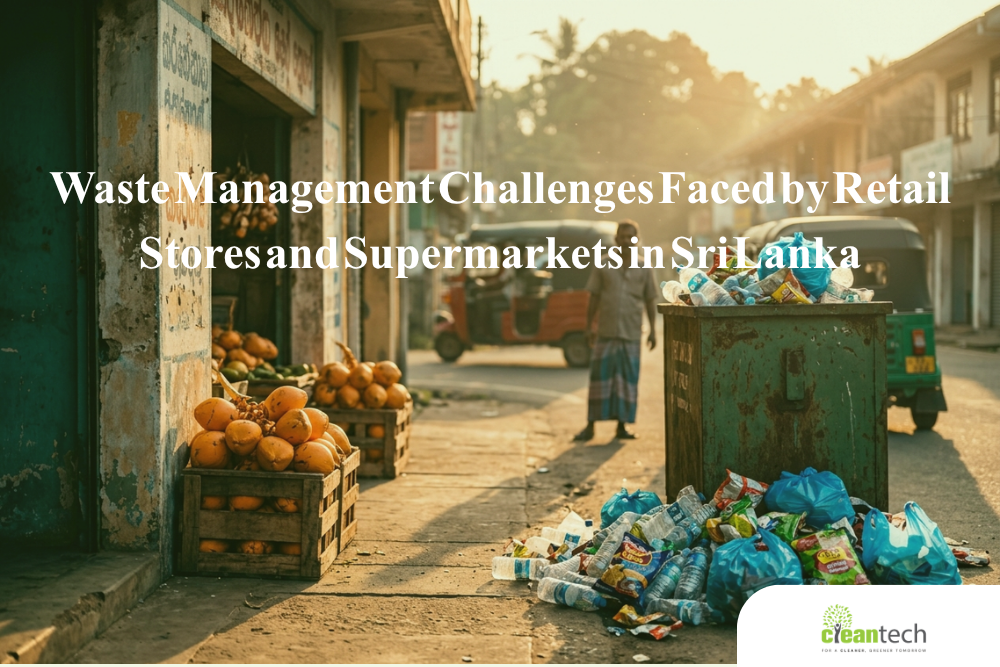
Waste Management Challenges in Retail Stores and Supermarkets… honestly, it’s becoming a bigger issue than most businesses first expect. At the beginning, it feels manageable. Just a few bins, regular collection, done. But as operations grow, things start to get messy literally.
In Sri Lanka, the retail sector has been expanding quite fast over the past few years. More supermarkets, more small stores, more daily customers. And with that, more waste. A lot more. The problem is, waste management systems haven’t really grown at the same pace.
So now, many stores are kind of stuck dealing with waste in ways that are not very efficient. Sometimes it’s poor planning, sometimes lack of resources. Sometimes… no one really thought it would get this big.
Understanding Waste Generation in Retail and Supermarkets
If you look inside a supermarket for just one day, you’ll see how much waste is actually created. It’s not just one type either, that’s where it gets tricky.
There’s food waste fruits going bad, expired dairy, damaged products. Then plastic packaging, lots of it. Cardboard boxes, wrapping materials, and occasionally even electronic waste from equipment or systems. Everything mixed into daily operations.
And the thing is, customer behavior plays a role too. People want convenience. Pre-packed items, ready-to-cook meals, takeaway packaging. It makes shopping easier, sure, but it also increases waste. So retail stores are dealing with both supply-side and demand-side pressure here.
Major Waste Management Challenges
Lack of Proper Waste Segregation at Source
This one sounds simple, but in reality, it’s often ignored.
Waste is usually not separated properly at the source. Everything goes into the same bin organic, plastic, sometimes even hazardous stuff. Once mixed, it becomes really hard to fix later.
Recycling becomes inefficient, sometimes not even possible. And then all of it just ends up going to landfills. It’s one of those small mistakes that creates bigger problems down the line.
Limited Recycling and Disposal Infrastructure
Even when businesses try to do the right thing, the system doesn’t always support them.
In many areas of Sri Lanka, proper recycling facilities are limited. Especially for plastics and packaging materials. So even if a store separates waste, there’s no guarantee it will be processed properly.
At the end of the day, a large portion still ends up in dumpsites. Not because businesses don’t care, but because options are limited.
High Volume of Food Waste
Food waste is… kind of unavoidable in retail. But still, the volume is quite high.
Supermarkets deal with perishable goods daily. Some items don’t sell in time, some get damaged, some expire faster than expected. It happens. But what happens next is the issue.
Without proper composting systems or redistribution channels, this waste goes straight to landfill. Over time, it produces methane gas, which contributes to environmental problems. Not something most businesses think about daily, but it adds up.
Inefficient Waste Collection Systems
Collection systems are not always reliable. That’s another challenge.
In some places, waste is collected regularly. In others, delays happen. Or schedules change without notice. For retail stores, this creates a problem because waste doesn’t stop it keeps coming every day.
So when collection is delayed, waste starts piling up. Storage becomes an issue. Hygiene becomes a concern. And employees have to deal with it, even though it’s not really their main job.
Regulatory and Compliance Challenges
There are rules and policies related to waste management, but enforcement is not always strong.
Also, guidelines for retail businesses can be unclear. Some stores are not fully aware of what they’re supposed to do. Others try to follow regulations but don’t have proper direction.
So compliance becomes a bit confusing. Not impossible, just… unclear at times.
Financial and Operational Constraints
Let’s be honest, proper waste management costs money.
Bins, sorting systems, training staff, maybe hiring external services all of this adds up. For small and medium-sized stores, this can be a challenge.
Even large supermarkets sometimes delay improvements because of cost concerns. It’s not always a priority compared to other business operations, even though it probably should be.
Low Awareness and Staff Training Gaps
Another issue that quietly affects everything lack of awareness.
Staff members are usually busy with daily tasks. Waste management is not always something they are trained for. So mistakes happen. Waste gets mixed. Systems are ignored.
Without proper training, even a good plan won’t work properly. It’s a small gap, but it has a big impact.
Environmental and Business Impacts
When waste is not managed properly, the effects don’t stay inside the store.
It leads to pollution land, water, even air. It can create health risks for workers and nearby communities. Over time, it becomes a bigger environmental concern.
And from a business side, customers are paying more attention now. People notice cleanliness, sustainability practices. Poor waste management can affect brand image, even if indirectly.
So yes, it’s not just an operational issue anymore.
Opportunities for Improvement
The good thing is, there are ways to improve. Not everything has to change overnight.
Retail stores can start small better segregation, reducing unnecessary packaging, managing food waste more carefully. Composting is one option. Partnering with waste service providers is another.
Some businesses are also using simple technologies to track waste. Nothing too complex, but enough to make better decisions. Over time, these small improvements can create a noticeable difference.
Best Practices for Retail Waste Management
There are a few practical steps that actually work, if done consistently.
Separating waste properly is the first one. Reducing single-use plastics where possible. Donating unsold but still usable food instead of throwing it away.
Training staff is important too maybe more important than systems themselves. And working with recycling companies can make the whole process smoother.
None of these are complicated, but they do require consistency.
Conclusion
Waste Management Challenges in Retail Stores and Supermarkets in Sri Lanka are not going away anytime soon. If anything, they might increase as the sector continues to grow.
But at the same time, these challenges are manageable. With the right approach, better awareness, and some level of commitment, businesses can handle waste more efficiently.
It doesn’t have to be perfect. Even small improvements can go a long way. And in the long run, it benefits not just the environment, but the business itself too.